

Getting Started
About
About Us
Learn More
Learn More
Books & Guides

Your gift means food, shelter and veterinary care for cats in need.
Books & Guides
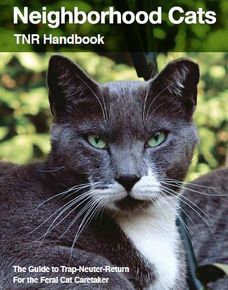
Neighborhood Cats TNR Handbook
The Neighborhood Cats TNR Handbook is an A to Z guide for cat colony caretakers on all things Trap-Neuter-Return. Drawn from our years of hands-on work, it covers trapping, feeding, winter shelter, neighbor relations and veterinary care. Also discussed are more specialized topics like trapping hard-to-catch cats and what to do with nursing mothers and their kittens. "The hands-on expertise of Neighborhood Cats' staff, as well as the group's involvement with caretakers around the world, makes this the most comprehensive and up-to-the-minute resource for educating caretakers on all aspects of colony management." (Animal Sheltering Magazine, Sept/Oct 2013.)
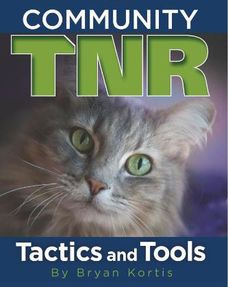
Community TNR: Tactics and Tools
Bryan Kortis, co-founder and current National Programs Director for Neighborhood Cats, authored Community TNR: Tactics & Tools while employed as a grants manager for PetSmart Charities and after overseeing hundreds of large-scale TNR projects. "Kortis now offers a blueprint of how to most effectively use TNR and return-to-field programs to reduce cat overpopulation in the shelter and community." (Animal Sheltering Magazine, Sept/Oct 2014.) Topics include targeted TNR, return-to-field, grassroots mobilization and integrating these approaches. Download for free or purchase a print copy on Amazon.
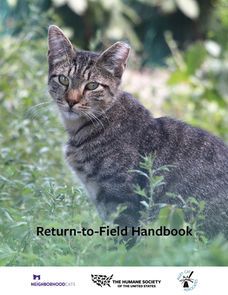
Return-to-Field Handbook
Return-to-field (RTF) programs have saved the lives of countless community cats across the United States. With RTF, eligible cats impounded at shelters are spayed or neutered and returned to their original locations instead of being euthanized or rehomed. The handbook, a collaboration of Neighborhood Cats, Humane World for Animals (then the Humane Society of the United States) and Alley Cat Advocates, goes over the entire RTF process, including gathering facts at intake, assessing eligibility, staffing, housing, veterinary care and doing the returns. Available for free download or purchase a print copy. Look for the new edition in early 2026!
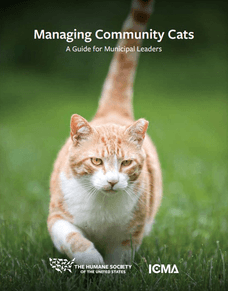
Managing Community Cats: A Guide for Municipal Leaders
Authored by Humane World for Animals and endorsed by the International City/County Management Association, this guide explains the policy behind TNR, gives real life examples of success, and helps officials implement nonlethal solutions to conflicts involving community cats. It's a resource for advocates attempting to persuade municipal leaders to support TNR, and useful for government officials looking to learn more about progressive solutions to cat overpopulation. Download for free.
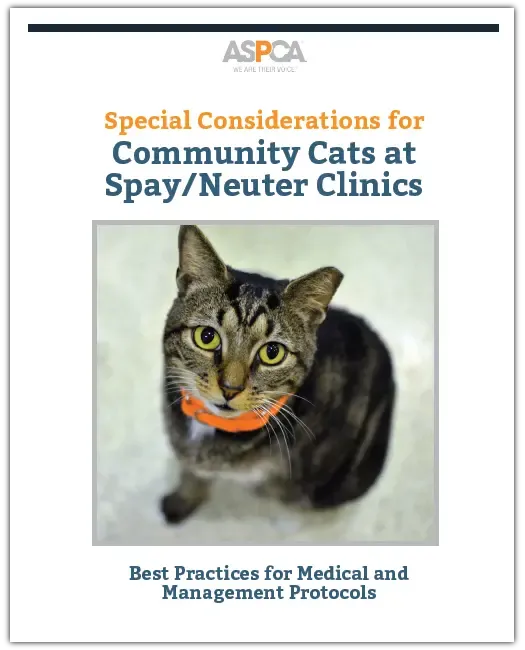
Community Cat Protocols
Download the ASPCA's free guide Special Considerations for Community Cats at Spay/Neuter Clinics: Best Practices for Medical and Management Protocols, published in 2014. The illustrated, full-color guide covers trapping, physical exams, patient selection and identification, anesthesia and analgesia, eartipping, surgery and recovery, tattooing and discharge and release. You can also explore the ASPCA's Spay/Neuter Library with its videos and articles on spay/neuter surgery in general plus a section on community cats.